
What's More Accurate Mirror or Camera? Reflection vs Reality
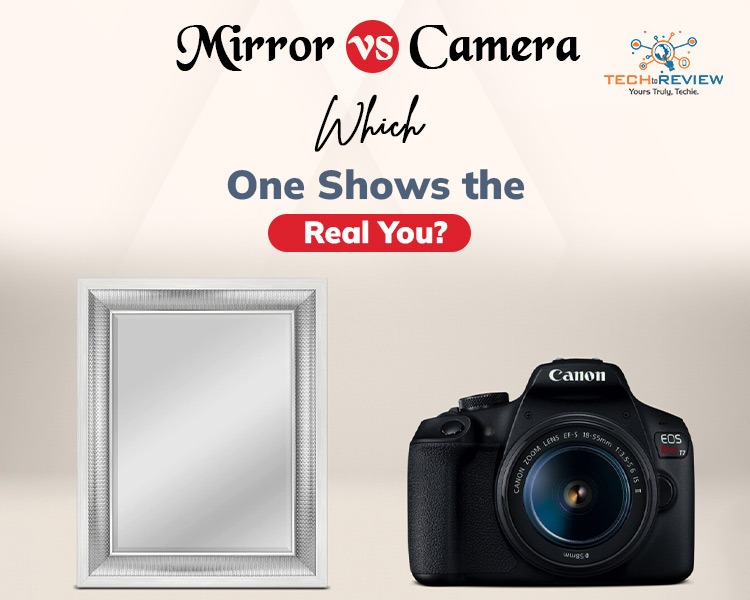
Have you ever looked in a glass mirror, felt great about your outfit, and then taken a selfie, only to wonder who that stranger is? It is a common frustration that leaves many people asking the same big question: what's more accurate mirror or camera?
When we look into a reflection, we see a familiar image. When we look at a photograph, we often see something completely different. This happens because of how light interacts with the mirror surface and the camera's sensor, resulting in different representations of your appearance. Let us dive into the science of reflections and lenses to find out what's more accurate camera or mirror, when it comes to showing the real you.
The Magic of the Mirror: Why It Feels More Real
For most people, a glass or mirror reflection feels like the absolute truth. When you stand in front of one, you are seeing a live, moving image. This real-time feedback allows your brain to automatically adjust to lighting and angles. Because you see yourself this way every single day, your mind comes to accept it as your true appearance.
However, mirrors have a secret twist. A plane mirror reverses the front-to-back axis, which makes the reflection appear left-right reversed from your perspective. This means your left eye appears on the left side of the reflection, which is backward from how the rest of the world views you. As explained by Encyclopaedia Britannica's guide to mirrors, a standard plane mirror creates a virtual image that appears reversed from left to right. Even though they are flipped, because mirrors provide continuous optical reflection without digital image processing, many people perceive them as more natural.
The Science of the Lens: How Cameras Change Your Face
A photograph captures light through a camera lens and saves it onto a digital sensor. While a camera does not flip your face as a mirror does, it introduces several distortions, by default, that alter reality.
- Lens Distortion: Different lenses can change the shape of your face. A wide-angle smartphone lens can make your nose look bigger, and your ears look smaller if you stand too close.
- Flattening: A camera turns a three-dimensional world into a flat, two-dimensional picture. This loss of depth can make faces look wider than they actually are. Hence the old saying, “ Camera adds 10 pounds.”
- The Frozen Moment: Unlike a live reflection, A photo freezes a brief moment in time. A single blink or a weird facial muscle twitch gets trapped forever, making the image look unnatural.
When you weigh these factors, figuring out what's more accurate camera or mirror becomes a balance between true symmetry and realistic depth.
The Battle of Reflections and Lenses
To truly settle the debate on what's more accurate mirror or camera, we need to break down how each tool handles your features.
So, what's more accurate, a mirror or a camera? If you want to know what your face looks like in terms of depth and form, the reflection is better. If you want to know which side your hair is parted on from an outsider's perspective, the lens is correct. So, the gist is, Mirror shows the you as you are, just inverted, but a Camera shows you how you look to the world.
Psychological Tricks: The Mere-Exposure Effect
There is a psychological reason why you prefer your reflection over a photograph. It is called the mere-exposure effect. This scientific rule states that humans prefer things they see most often.
You have looked at your flipped face in reflections your entire life. When a phone lens shows you the unflipped version, your brain instantly notices that your asymmetrical features are backwards. It feels wrong, even though the phone is technically showing how you look to a friend. This mental trick makes it hard to judge what's more accurate mirror or camera without bias.
You Might Also Like- Affordable Trail Camera With Features Worth Looking For
The True Winner Revealed
So, what is the final answer to what's more accurate mirror or camera?
The mirror is more accurate for showing true physical depth, shape, and life-like motion without digital distortion. However, it fails at showing your true orientation because it flips your image left-to-right.
The camera is more accurate at showing how you look to others in terms of left-right orientation, but it distorts facial shapes through flattening and lens distortion.
If you want the absolute truth, look into a specialised "non-reversing mirror" which uses two glass panes to show an unflipped, three-dimensional view of yourself. Until you get one of those, trust your reflection for beauty checks, and blame the smartphone lens distortion for bad pictures.
Frequently Asked Questions
Is the mirror how others see you?
Not exactly. While a mirror accurately reflects your 3D dimensions and fluid movements, it horizontally reverses (flips) your face. Since human faces are asymmetrical, others see you "un-flipped". Because you are accustomed to your mirrored reflection, an unreversed image (like a photo) can feel uncanny to you.
Are mirrors 100% accurate?
While mirrors can accurately reflect our physical features, they can also subtly distort our appearance.
Do I trust my mirror or my camera?
Trust the mirror for how you move and live, but understand it flips your image. Trust a high-quality, unflattering photo for absolute realism, but remember that close-up phone cameras warp your face.
Do photos show your real face?
No, a single photo doesn't perfectly capture your real face. Cameras flatten three-dimensional features into two dimensions and often distort proportions due to lens focal lengths.
Which face is real, the selfie or the back camera?
The back camera is more "real" because it shows how the world and other people see you. Selfies flip your image horizontally to match what you see in a mirror.
About author

Rangefinder Digital Cameras: Benefits and Limitations

Discover what a rangefinder in digital camera is, how its focusing works, its advantages and limitations, and why photographers love it for street photography.
Why Phone Storage Gets Full Even If You Barely Install Anything

Discover why your phone storage fills up without installing apps. Learn how cached files, photos, hidden downloads, and system data consume space.
Top 5 Entry-Level DSLR Camera Picks to Buy in 2026
Looking for a great beginner camera? Discover the top 5 entry-level DSLR cameras to buy in 2026, featuring the best budget, travel, and video choices.
Best LED Black Friday TV Deals: Your TV Shopping Guide

Discover the best LED Black Friday TV deals for 2026: when sales start, how much you can save on LED, QLED, and OLED TVs, plus tips to spot fake discounts.
Portable Bluetooth Speaker: Best Picks for Your Travel Bag

Looking for a portable Bluetooth speaker for travel? Check out 5 easy-to-carry options with different sound, battery, and durability features.
Budget Gaming PC: The Smart Gamer’s Guide to Saving Money

Looking for a budget gaming PC? Learn how to choose the right GPU, CPU, RAM, storage, PSU, and cooling without overspending.