
What Is Zero-Trust Security Model And It’s Principles
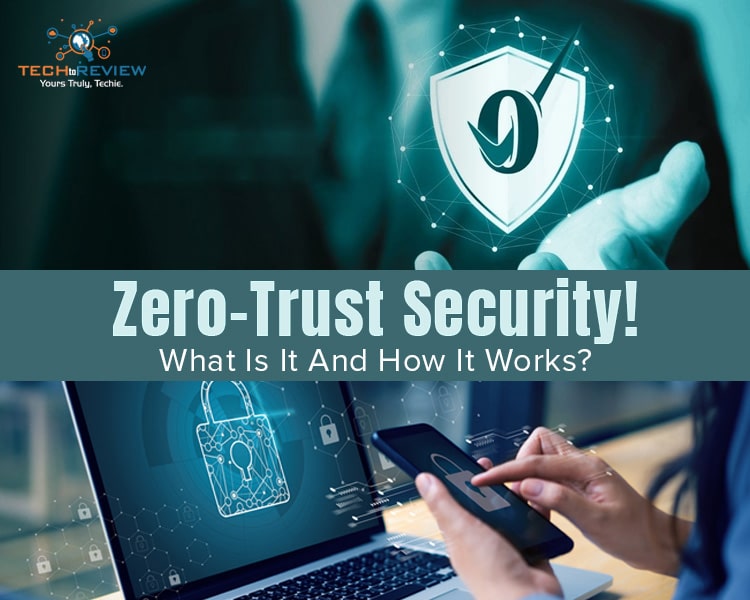
There are several security frameworks with different purposes. For instance, the NIST Cybersecurity Framework, that works for comprehensive and personalised security weakness identification. If you ever heard of the zero-trust and think what is zero-trust security model it’s one of them. The zero-trust model is one of them and works to prevent data violation.
Zero trust began as a concept in 1994 and has become an established security approach. At present, cybersecurity has become more crucial than ever before, and zero trust security can help with that. We will share what is zero-trust security model in this blog. Also, we will highlight other information about it, like the three principles of zero trust. So, you must read the full blog and learn about Zero Trust.
What Is Zero-Trust Security Model: Explanation
It’s an IT security model that requires strict identity verification for every individual or device trying to access and use resources on a private network. Because of its high security, this model is becoming increasingly popular day by day in organisations. According to Gartner (an American research and consulting services provider company) research, by 2025, 60% of organisations will embrace a zero-trust security strategy.
Now you have an idea about ‘what is zero-trust security model’, but you also need to know how it works. Scroll down to learn about it in the section below.
How Does Zero Trust Security Work?
The zero-trust framework execution blends advanced technologies, such as identity protection, next-generation endpoint security, and robust cloud workload technology. It verifies a user or system’s identity, consideration of access at that time, and maintenance of system security.
What Are The Three Principles Of Zero Trust?
Let’s move forward on our blog of what is the zero trust security model and learn what are the three principles of zero trust:
1. Continuous Verification
Continuous verification is a method to check a user’s identity in real-time. It contains two elements:
- Risk Based Conditional Access:
This confirms that the system is only interrupted when the risk level changes and allows continual verification without losing user experience.
- Rapid And Scalable Policy Categorisation:
Workloads, data, and users can be changed; hence, the policy must account for risks and include compliance and IT requirements, and continuous verification takes care of it.
2. Limit The Blast Radius
It’s the second principle on this blog “what is Zero-Trust Security model”. If a violation occurs, minimising its impact is necessary. Zero trust limits attackers' authorisation so that systems and users have time to respond to the attack. Limitation of radius refers to:
- Using Identity-Based Division
Traditional network-based divisions can be challenging to maintain because workloads, users, data, and authorisation frequently get changed.
- Least Privilege Principle:
It’s important that authorisations are used only to perform tasks at minimum capability. As tasks often change with privilege, so does their range. Many attackers leverage the benefits of privilege.
3. Automate Context Collection And Response
To answer your question, “What are the three principles of zero trust?” this point is extremely important. It says that more data helps to make effective and accurate decisions. However, the data is processable and actable in real-time. The NIST (National Institute of Standards and Technology) guides the use of data from the following sources:
- User Authorisation: human and non-human (service, non-privileged and privileged accounts)
- Workloads: including VMs and containers
- Endpoint: devices getting used to access data
- Network
- Other Sources
- SIEM
- SSO
- Identity providers
- Threat Intelligence
We are almost at the end of this blog, “What is zero-trust security model?” so we will now learn the importance of a zero-trust security framework. Scroll down to discover why zero trust is important.
Why Is Zero-Trust Security Model Important
In this blog, “What is zero-trust security model,” below are the reasons why zero-trust security is important:
1. A plethora of high-profile data violations has driven the need for cyber security. Moreover, the COVID-19 pandemic has spread the demand for secure remote access to technology, in which zero trust can help.
2. Previously, enterprises used firewall technologies to shield corporate networks. In this model, users can access resources remotely using a VPN. However, some suspicious individuals can obtain VPN login authorisation, resulting in data violations. Ultimately, using a VPN is dangerous, and the zero trust security model is a good alternative for VPN users.
3. Most enterprises’ resources reside in private data centres and multiple clouds, which require security. Zero trust can provide high security.
In this blog, we learned ‘what is zero-trust security model’, and its principles and importance. Zero-trust can be an alternative security option if you use a VPN and can help prevent data violations.
Frequently Asked Questions
1. What is the concept of the zero-trust framework?
The concept behind the zero-trust model is “never trust, always verify,” which means users and devices should not be trusted by default.
2. What is an example of the zero-trust security policy?
When a new service account is defined, or a new employee joins the company, they can't access any system at the beginning.
3. What are the five pillars of zero trust?
The five pillars are IAM, network segmentation, device security, data security, and continuous monitoring.
4. What is the purpose of zero trust?
Its purpose is to secure organisations by eliminating implicit trust and continuously checking digital interactions.
5. Who is the father of zero-trust?
John Kindervag is called the father of zero-trust.
How I Reclaimed Crucial SSD Space Without Deleting Essential Data Using Advanced SystemCare 20
I did not want to drag folders to the Recycle Bin and hope for the best. I wanted to free up room without losing documents, photos or settings. That is how I ended up testing Advanced SystemCare 20, a free Windows cleaner from IObit.
Samsung TV Not Connecting to WiFi? Get the Easy Fixes Here

Samsung TV not connecting to WiFi? Learn why it happens, try easy step-by-step fixes, and know what to do if nothing works. Fix & get back to streaming fast.
Rangefinder Digital Cameras: Benefits and Limitations

Discover what a rangefinder in digital camera is, how its focusing works, its advantages and limitations, and why photographers love it for street photography.
Why Phone Storage Gets Full Even If You Barely Install Anything

Discover why your phone storage fills up without installing apps. Learn how cached files, photos, hidden downloads, and system data consume space.
Top 5 Entry-Level DSLR Camera Picks to Buy in 2026

Looking for a great beginner camera? Discover the top 5 entry-level DSLR cameras to buy in 2026, featuring the best budget, travel, and video choices.
Best LED Black Friday TV Deals: Your TV Shopping Guide

Discover the best LED Black Friday TV deals for 2026: when sales start, how much you can save on LED, QLED, and OLED TVs, plus tips to spot fake discounts.