
Top 8 Smart Home Devices That Actually Upgrade Your Home
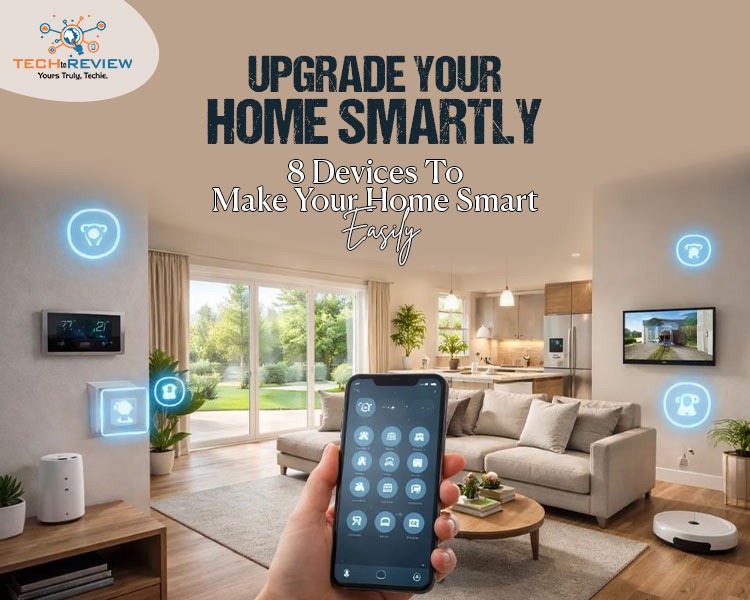
Smart homes, once a novelty only a few possessed, are commonplace in 2026, and rightly so. The global smart home devices market is on track to hit $180 billion before the year ends, and it's only the base camp. The summit is yet to come. In the US alone, around 77 million homes already use some form of connected tech, and worldwide device shipments are approaching 1.25 billion units this year. Even more telling is that Gen Z and Millennials lead the charge, with 96% and 93% ownership of smart devices, respectively.
The category has also matured a lot as well. Thanks to the Matter protocol, most new smart home devices now work across several smart assistants like Alexa, Google Home, and Apple HomeKit without the brand-lock-in headaches of a few years ago. So, whether you're just starting out or filling gaps in an existing setup, here are 8 smart home devices actually worth your money right now, covering lighting, cleaning, air quality, security, and comfort. So, stick to the very end of the blog to learn how you can make your place an aesthetic abode.
1. Amazon Echo (5th Gen)
Priced at $50(Subject to change), Amazon’s Echo Dot is the entry point for most smart homes. It is a compact speaker that acts as your voice-controlled hub for lights, thermostat, plugs and even locks. Ask it to play some music, or maybe dim the lights to match the music while turning down the temp a little bit; it can do it all. What makes Amazon Echo one of the best smart home devices is its emphasis on functionality and reliability while being affordable for the masses, not just sound quality as many “smart speakers” do.
2. Philips Hue White and Colour Ambience Starter Kit
Coming in at number two is the Philips Hue White and Colour Ambience starter kit, a $130 piece of kit to turn your house into a rave. Maybe not a rave, but a lot more aesthetic. This is smart lighting done properly. We say that because it offers the full spectrum of RGB lighting and features like syncing lighting effects with movies and music, as well as automatically following schedules or routines. Hue's edge is reliability and depth. Once you add the main Bridge, you unlock advanced automations, geofencing, and support for over 150 lights on one system — something budget lighting brands still can't match. Lighting is also the most common first purchase for smart-home beginners, so it's a natural starting category.
3. Roborock S8 Pro Ultra
So far, we have covered quite reasonable, inexpensive products. However, this entry raises the bar by quite a lot. Coming in at $1600, Roborock’s S8 Pro Ultra is a robot vacuum and mop in one that handles both tasks simultaneously. Moreover, it empties itself into the dustbin, and even washes and dries its own pads without your intervention. However, what sets it apart is its obstacle avoidance system. The bot uses structured light and camera-based detection to identify and dodge cables, shoes, or pet toys.
4. Levoit Core 300S Smart Air Purifier
Levoit Core 300S Smart Air Purifier is one of those smart home devices that offer much more for a lot less. Priced at just $100, this air purifier filters airborne particles, pet hair, dust and odour from a room using a nylon pre-filter and activated carbon filter. It does this multiple times every hour. However, the best feature of this product is the ability to track almost everything on your phone. What is the air quality in real time? When does the filter need to be changed? This tells you everything.
5. Google Nest Learning Thermostat
Sitting firmly at number 5 is Google’s Nest Learning Thermostat. It is a smart thermostat that learns your schedule and temperature preferences over a week and then automatically adjusts the temperature accordingly. Now, why do you need a “Smart” thermostat? Well, smart home devices like this one are consistently among the highest-ROI home purchases because they reduce inefficiency and typically save around $150-$300 a year on energy bills. This means that Nest virtually pays for itself in a year or two.
6. Ring Battery Video Doorbell
One of the biggest problems in many places is petty theft that can easily be avoided with a doorbell camera. However, most doorbell installations are often hefty. You need an electrician and someone to set up the camera. Amazon’s(Ring) Battery Video Doorbell has none of that. All you have to do is stick it to your door, and you are all set. It uses a battery, so you don’t need to plug in some wire somewhere. It streams HD video from your front door to your phone, with motion alerts and two-way audio so you can talk to the person at your door, regardless of where you are. You can’t possibly expect more for $100.
You Might Also Like: Learn How To Play Spotify On Google Home Speaker!
7. Kasa Smart Plug (4-Pack)
Now, we don’t live in the 22nd century. We understand that some of the vital devices you use must not be smart. This is where the Kasa Smart Plug comes in. TP-Link's Kasa Smart Plug comes in a 4-pack for around $35, turning any regular lamp, fan, or appliance into a smart device. Now you can schedule it, control it remotely, or group it into routines, all without replacing the appliance itself. It's the cheapest, lowest-effort way to smarten up a home, since instead of buying all-new smart appliances, you retrofit what you already own. That's exactly why smart plugs are usually the second purchase after a speaker in most starter setups.
8. Govee Smart Humidifier
Govee's Smart Humidifier is priced around $70 and automatically maintains ideal humidity levels in a room using app-based scheduling and real-time humidity tracking, rather than a fixed manual dial. Most humidifiers are "set it and forget it" in the worst way, but Govee's version actually adjusts output based on live readings, so you're not manually guessing whether a room is too dry or too damp, something that matters a lot more in extreme seasons or for anyone with respiratory sensitivities. Moreover, it also reduces your energy consumption. Rather than running perpetually, it can adjust its output based on the room.
The Smartest Home is the One You Actually Use
None of these devices needs to be bought all at once, and none of them needs to talk to each other perfectly on day one; that's what ‘Matter’ is for now. Don’t make the decision based on price, or any other marketing jingle. Start with whichever annoyance bothers you most: bad air, a manual thermostat, or floors you're tired of vacuuming. A smart home isn't built in a weekend. It's built one fixed annoyance at a time, until one day you realise you haven't touched a light switch in months.
Frequently Asked Questions
Q- What are the disadvantages of a Smart Home?
A- Although there are some disadvantages like high cost, reliance on technology, complex installations, and glitches, its benefits outweigh its drawbacks by a mile.
Q- How long do the devices last?
A- As most devices are new, there isn’t any baseline for their longevity. That being said, most smart home devices are poised to last at least a decade, depending on software support and hardware quality.
Q- Are smart home devices AI-enabled?
A- Yes. Depending on the niche of the product, it can be AI-enabled.
About author

Laptop vs Desktop: Which System Fits Your Life Best?

Discover the main differences between laptop vs desktop. Compare performance, price, and portability to choose the perfect PC for your workflow.
Top 8 Smart Home Devices That Actually Upgrade Your Home
Listing the best smart home devices to help you convert your home into an intelligent den. Read the full blog to the very end to learn everything.
The Ultimate Guide to the Best Budget Cell Phone 2026

Find the best budget cell phone in 2026. Compare the 10 affordable smartphones from Samsung, OnePlus, and Moto featuring massive batteries and 120Hz displays.
The Tech and Addons That Shape Raid Progression in World of Warcraft

A look at how World of Warcraft raid addons actually work, what changed under Midnight's addon restrictions, and examples from the Voidspire encounters
Mirrorless vs DSLR Camera: Which One Should You Choose?
Compare mirrorless vs DSLR cameras based on size, autofocus, battery life, price, and image quality to choose the best camera for your needs.
Best Lens for Real Estate Photography: Top 5 Picks

Discover the best lens for real estate photography with our top 5 picks. Capture sharp, wide property photos that attract buyers and boost listings.