
eSIM Vs Physical SIM: A Complete Comparison Guide
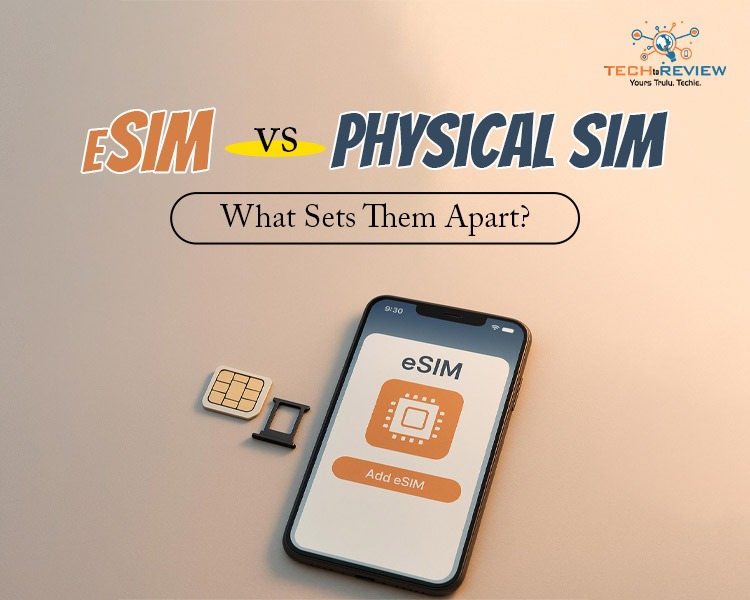
If you’ve recently switched phones or carriers, you’ve probably struggled to fit the SIM into your phone. The reason is that there is a newer SIM option called eSIM, which makes people confuse which one to choose. This is why it is important to understand eSIM Vs Physical SIM.
The comparison actually helps you make a better decision. In this blog, we’ll break everything down simply so you can confidently choose what works best for you.
What is eSIM?
eSIM or embedded SIM is a digital version of a traditional SIM card. Instead of inserting a physical SIM card into your phone, an eSIM is embedded directly into your device.
Yes, you got it right. No fiddling, No trays and No worries about losing a tiny card. You can activate your mobile plan by simply scanning a QR code or downloading a profile from your carrier.
When comparing eSIM Vs Physical SIM, both options are reliable, but eSIM is extremely flexible. Surprising to know that you can store multiple profiles on one device and switch between them without physically swapping anything.
This is especially useful for people who use more than one phone number.
What is a Physical SIM?
Physical SIM, though it does require an introduction, is a small plastic card with a copper chip installed. You need to insert it into your mobile to connect to the network. It stores your information and allows your device to make calls, send texts and use mobile data.
This is the traditional data that has been around for decades and is now being replaced by eSIMs. One of the biggest advantages of Physical or Traditional SIMs is that you can simply insert them into any mobile with a tray and move between devices, and you are good to go, no setup required, like eSIM.
This is another factor to consider when comparing eSIM vs physical SIM.
eSIM Vs Physical SIM: The Difference
Discussing the difference between eSIM and Physical SIM is crucial if we want to understand Physical SIM Vs eSIM. Here is a quick comparison to help you understand how these two options are different and which one you should choose.
The debate around eSIM vs Physical SIM is becoming more common as smartphone technology evolves. While eSIM offers seamless activation and the ability to manage multiple phone numbers, a Physical SIM Card remains a preferred choice for users seeking easy SIM insertion and universal support. Now the concern is which is better for you. Let’s discuss, is eSIM better than Physical SIM?’
Which SIM is Right For You?
Well, the choice depends entirely on your lifestyle and how you use your phone. Comparing eSIM vs Physical SIM shows that each has distinct advantages.
Go for eSIM if you -
- Like convenience and minimal hassle.
- Travel frequently and need multiple networks.
- Switched to a new smartphone that supports eSIM.
- Want a more secure and future-ready option.
Go for a Physical SIM if you -
- Often switch phones.
- Use an older or budget-friendly device.
- Carrer doesn’t support eSIM.
- Prefer simple and familiar things.
When comparing eSIM vs Physical SIM, both options offer reliable mobile connectivity, but they differ in connectivity, flexibility, and functionality, as is clear from the above discussion.
An eSIM is embedded directly into the phone, allowing users to switch between networks without inserting or replacing the SIMs. On the other hand, a Physical SIM is widely compatible.
Understanding physical SIM Vs eSIM is important to make the right decision depending on your needs.
Ready to Switch?
If you’re thinking about switching to eSIM, the process is straightforward.
All you need is a compatible device, and request eSIM activation from your carrier. With just an app or QR code, you are all set.
With eSIM Vs Physical SIM, you probably understand that both SIM types have their own advantage. However, with advancements, users are switching to eSIMs. Many newly released phones, such as the iPhone 16e, offer an eSIM option, making it convenient for users who frequently travel internationally.
Frequently Asked Questions
Is eSIM better than a physical SIM?
Frankly speaking, it depends on your needs. eSIMs offer greater flexibility and convenience, whereas Physical SIMs are more widely supported and easier to swap between devices.
Can I use both an eSIM and a physical SIM at the same time?
Yes, many phones support dual-SIM functionality that allows you to use both at the same time.
Is eSIM safe?
Of course. There is no risk of theft or damage with an eSIM.
What happens if I change my phone to an eSIM?
You need to activate the eSIM via a QR code or an app. Your carrier partner will help you switch the SIM.
Do all carriers and phones support eSIM?
Not yet. With growing demand, phone manufacturers and carriers are steadily shifting to eSIM.
Why Is My Cell Phone Getting Hot? Learn the Quick Fixes

Wondering why is my cell phone getting hot? Discover the hidden triggers behind your device overheating and learn quick, safe tricks to cool it down fast.
How to Make Your Laptop Run Faster: Easy Ways to Speed Up

Is your laptop slow or freezing? Learn easy ways of How to make your laptop run faster, from clearing files and updating software to upgrading RAM and SSD.
Why Responsible IT Asset Disposition Matters in the Age of Constant Upgrades

Discover why responsible IT asset disposition matters in an upgrade-driven world, helping businesses protect data, reduce waste, and recover asset value.
3:2 vs 16:9: Which Aspect Ratio Should You Choose

Wondering about 3:2 vs 16:9 aspect ratios? Learn the key differences, best use cases, and limitations to pick the right one for your shots.
Fujifilm X100T Review: Real-World Quirks No One Talks About

Discover real-world Fujifilm X100T quirks no one talks about. Learn the truth about battery life, macro parallax errors, and ND filters.
Find the Absolute Best Streaming TV Service in 2026

Ditch expensive cable with confidence! Discover the 10 absolute best streaming TV services in 2026, from YouTube TV to Netflix, for your perfect setup.