
Prime Lens vs Zoom Lens: Which One Should You Choose?
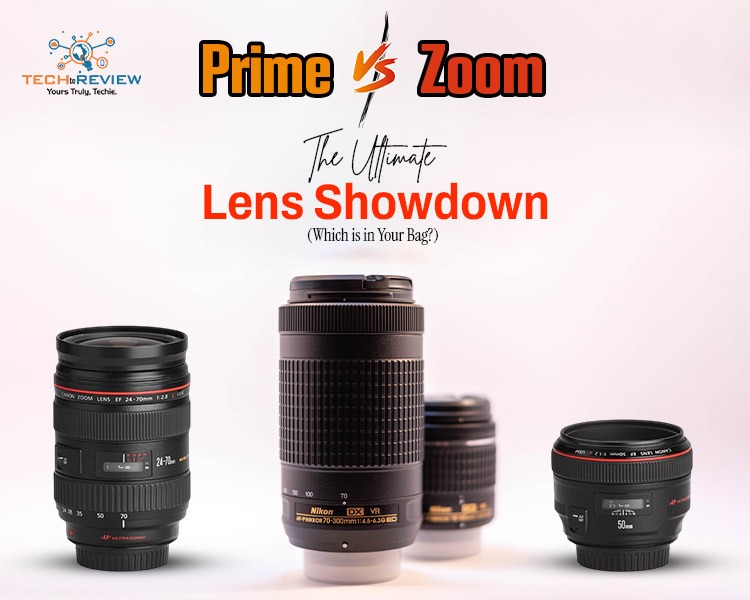
You are packing your camera bag for a weekend shoot, staring at your gear, and asking yourself the same old question: "Should I bring the heavy lens that does everything, or just take my favourite small, fixed one?"
You head out anyway. Halfway through the day, you find yourself quickly swapping lenses on a dusty street corner because your subject moved. You are sweating, terrified that dirt will get inside your camera sensor. Or maybe you are trying to shoot a beautiful sunset, but your lens cannot let in enough light. Your picture comes out dark, grainy, and ruined.
That everyday struggle is exactly why the prime lens vs zoom lens debate is still a big deal. It is not just about technical specs; it is about making your life easier when you are out there trying to capture a perfect moment.
What is a Prime Lens?
A prime lens has a fixed set of angles of view, or we can say focal length, which cannot be changed until you try to change it manually. Whether you physically move closer to your object or move further from your object. They have wider apertures such as f/1.2, f/1.4, or f/1.8.
What is a Zoom Lens?
A zoom lens is a lens with an adjustable focal length. By easily twisting the barrel, you can zoom in on the object and zoom out to the object. You do not have to change the lens or physically move to capture the objects from different angles.
Why the Prime Lens vs Zoom Lens Debate Still Matters in 2026
You might wonder why the prime lens vs zoom lens dilemma persists when modern manufacturing is better than ever. The truth is, while engineering has closed the performance gap, the fundamental laws of physics have not changed. Photographers are still forced to balance the absolute light-gathering power of a fixed build against the rapid adaptability of a variable barrel. Your choice directly shapes how you interact with your environment.
Prime Lens vs Zoom Lens — The Core Differences
Below is a table explaining Prime Lens vs Zoom Lens. If you love photography and are confused about which lens to buy, you can check out the table to see the differences.
Prime Lens vs Zoom Lens Photo Comparison
You must be curious to know about the photo quality of both the lenses, so here is the table comparing prime lens vs zoom lens:
Prime Lens vs Zoom Lens: Real-World Shooting Scenarios
Choosing between a prime lens and a zoom lens depends entirely on what you shoot. When comparing a prime lens vs zoom lens setup across different styles, you quickly see that each tool has its own superpower.
Portraits: The Ultimate Bokeh Battle
Choosing a lens depends on what you want to shoot. If you want to capture people, then a prime lens is a go-to choice for portrait photography. As these lenses have 50mm and 85mm of dedicated lenses and ultra-wide apertures (like f/1.4 or f/1.8). This helps in creating a blurry background effect.
Wildlife: Speed and Reach in the Wild
If you are a wildlife photographer, then you should definitely choose a zoom lens. Capturing animals is definitely dominated by a zoom lens. A zoom lens of 100-400mm or 150-600mm versatile lens lets you capture the flying bird or a distant tiger in the woods in a split second.
Travel: The One-Lens Dilemma
When you are travelling, you are already carrying the weight of your luggage, so you prefer to carry a lightweight, flexible camera. A single 24-70mm f/2.8 or 24-105mm f/4 zoom lens acts like a Swiss Army knife. It keeps you ready for wide landscapes or quick street shots without changing gear. However, a tiny 35mm or 50mm prime lens is very lightweight, easy to hide, and works perfectly in dark night markets.
So, Which Should You Buy — Prime or Zoom?
In this prime lens vs zoom lens debate, let's see which one suits you the best.
Buy a Prime Lens If…
- You want a lightweight, everyday-carry, portable setup.
- You prefer portrait photography with low-lights
- You want to master a specific focal length and improve your compositional discipline.
Buy a Zoom Lens If…
- You love wildlife photography
- You love to capture the fast-moving objects, such as animals or love sports photography
- You want a one-purpose tool for all your work
- You work in dusty or harsh environments where changing glass is risky.
At the end, in the debate of prime lens vs zoom lens, it entirely depends upon your choice of photography. The way you like to shoot the objects, or the location you are going to. Think about what you need for your creative style, look at your typical surroundings, and then pick the perfect lens to match your vision.
Frequently Asked Questions:
Can I buy both the lenses?
Yes! You can definitely buy both. Having a zoom lens gives you great flexibility for different distances, while a prime lens gives you sharper photos and beautiful blurry backgrounds.
Which lens is best for beginners? Prime lens or zoom lens?
A zoom lens is usually best for beginners. It offers multiple focal lengths in one, letting you experiment with different styles and framing without changing lenses.
Do zoom lenses make you lazy?
Yes, they can. Because zoom lenses let you change focal lengths without moving, photographers might stand in one spot instead of moving around to find better angles.
Which lens is best for videos?
For videos, a zoom lens is usually best because it lets you change focal lengths quickly without swapping lenses, giving you great versatility while shooting.
About author

How I Reclaimed Crucial SSD Space Without Deleting Essential Data Using Advanced SystemCare 20

I did not want to drag folders to the Recycle Bin and hope for the best. I wanted to free up room without losing documents, photos or settings. That is how I ended up testing Advanced SystemCare 20, a free Windows cleaner from IObit.
Samsung TV Not Connecting to WiFi? Get the Easy Fixes Here
Samsung TV not connecting to WiFi? Learn why it happens, try easy step-by-step fixes, and know what to do if nothing works. Fix & get back to streaming fast.
Rangefinder Digital Cameras: Benefits and Limitations
Discover what a rangefinder in digital camera is, how its focusing works, its advantages and limitations, and why photographers love it for street photography.
Why Phone Storage Gets Full Even If You Barely Install Anything

Discover why your phone storage fills up without installing apps. Learn how cached files, photos, hidden downloads, and system data consume space.
Top 5 Entry-Level DSLR Camera Picks to Buy in 2026
Looking for a great beginner camera? Discover the top 5 entry-level DSLR cameras to buy in 2026, featuring the best budget, travel, and video choices.
Best LED Black Friday TV Deals: Your TV Shopping Guide
Discover the best LED Black Friday TV deals for 2026: when sales start, how much you can save on LED, QLED, and OLED TVs, plus tips to spot fake discounts.