
Types of Internet Connections: Dial-Up to 5G Evolution
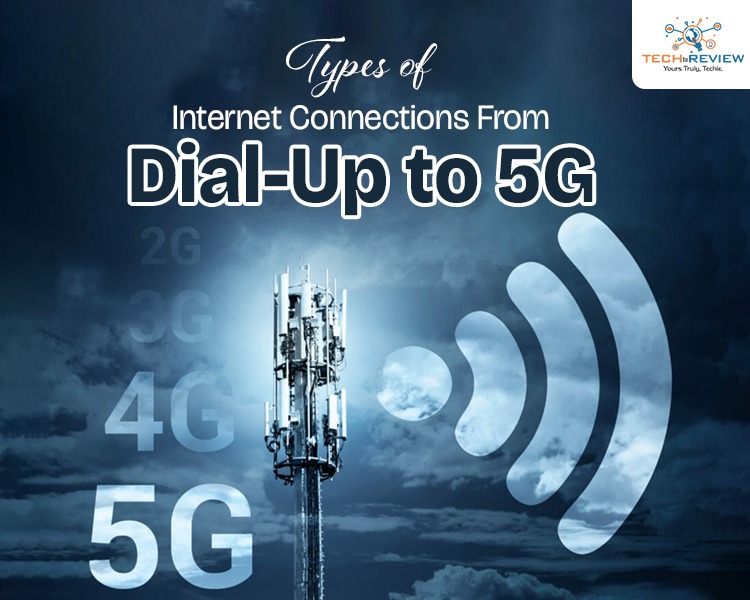
We all once asked our grandparents how they used to connect or communicate in their time. There were no mobile phones, messaging apps, or the internet. They smile and tell their stories of waiting a long time for letters. But today you can send messages very quickly due to advances. Different types of internet connections not only allow sending messages and making calls but also enable video calls from anywhere in the world. You can even stream shows in a matter of seconds. The transition from early methods like letters (and, historically, even carrier pigeons) all the way through to the new 5G technology has been extraordinary. Today, the internet has become our primary means of communication.
What is the Internet?
The endless web of devices, from smartphones to laptops to printers and everything else, is referred to as the internet. It also provides access to things such as instant messaging, video streaming, and online classes. With millions of users accessing the internet every minute of every day, it enables fast data transfer across interconnected networks worldwide. In terms of the speed at which information flows through different types of Internet Connections.
Types of Internet Connections
As demand for faster and more stable connections grew, technology evolved rapidly, including technologies such as optical fibre (OFC) and modern cellular networks, and high-speed cellular networks, including 4G and 5G. Let's understand the types of internet connections, their features, and how they suit different needs.
1. Dial-Up Connection
Among the oldest types of connections, dial-up is an internet connection via a standard phone line. When you connect to the internet, the modem converts digital data into analogue signals over a telephone line to connect to your ISP and sends and receives data over the phone line.
2. Broadband Connection
Broadband is one of the internet connections that gives high-speed internet, much faster than dial-up. You can use the internet and phone at the same time, and many people do.
It uses different technologies like cable, fibre, radio, or telephone lines to send data quickly and smoothly.
3. DSL (Digital Subscriber Line)
DSL is one of the types of Internet connections that uses a telephone line to transmit data at speeds much faster than dial-up. One of the great benefits of DSL is that you can use both your telephone and the internet at the same time. DSL provides high-speed (broadband) access to the internet, which is very useful in homes and small businesses.
Generally speaking, DSL is much faster than dial-up; however, DSL is usually slower than cable and fibre optic internet service. Most people who use DSL will have a steady internet connection in their home for everyday tasks like searching for work and doing research online. However, DSL is not necessarily the best option for heavy user applications like gaming and searching activities like video streaming and online gaming.
4. Cable
Cable internet is one of the types of internet connections that gives fast internet using a cable modem. It works through coaxial cables used in cable TV infrastructure.
The speed can be different for uploading and downloading. It is much faster than dial-up and good for normal internet use.
5. Satellite Connection
Satellite internet is one of the most commonly used internet connections in rural areas where broadband is not available. It connects to the internet through a satellite in space.
The signal travels from Earth to the satellite and back, so it can be slow and have delays. It is useful in remote areas, but not very fast.
6. Wireless Connection
Wireless is one of the types of internet connections that does not use cables or telephone lines. It uses radio signals to connect to the internet.
For the most part, it is always on and can be used from different places, but the speed may vary depending on your location and signal strength.
7. Cellular
Cellular is one of the internet services that everyone uses, and it gives internet through mobile networks. You can use it on your phone anywhere.
The speed depends on the network, such as 3G, 4G and 5G. 3G is slower, while 4G and 5G technology is much faster and better for daily use, but it can sometimes slow down; you can fix it with various methods, too, for example, switching networks, improving signal strength.
8. ISDN (Integrated Services Digital Network)
Types of Internet Connections include ISDN, which uses a digital telephone line to send both voice and data.
It is faster and clearer than old connections like dial-up, but its speed is still limited compared to modern internet options.
Components Required For Internet Connection
Modem: A device that modulates and demodulates signals for internet connections to send and receive data through telephone lines or cables.
Router: A device that connects your devices to the internet and shares the connection, often using Wi-Fi.
ISP (Internet Service Provider): A company that provides internet access services to users.
How We Stay Connected Today
We have come a long way since dial-up internet, and now we can enjoy Types of Internet Connections through 5G technology networks, and you can also search for the best wifi connection for home. What started as an experiment with military applications has become a part of our daily lives.
Next time you see your video loading quickly or your message being sent instantly, think about the innovations behind it. Who knows what other exciting changes we may see in the way we use the internet?
FAQ
-
Which type of internet offers the best WiFi connection for home use?
Fiber optic is your best bet! It’s the fastest and most reliable option available, making it perfect for smooth streaming, gaming, and connecting everyone in the house at once.
-
How does 5G technology make our mobile internet much faster and more reliable than before?
5G technology uses wider airwaves and smarter towers to send data instantly. It’s like adding more lanes to a highway, so your internet stays super fast even when it's crowded!
About author

Samsung TV Not Connecting to WiFi? Get the Easy Fixes Here
Samsung TV not connecting to WiFi? Learn why it happens, try easy step-by-step fixes, and know what to do if nothing works. Fix & get back to streaming fast.
Rangefinder Digital Cameras: Benefits and Limitations

Discover what a rangefinder in digital camera is, how its focusing works, its advantages and limitations, and why photographers love it for street photography.
Why Phone Storage Gets Full Even If You Barely Install Anything

Discover why your phone storage fills up without installing apps. Learn how cached files, photos, hidden downloads, and system data consume space.
Top 5 Entry-Level DSLR Camera Picks to Buy in 2026

Looking for a great beginner camera? Discover the top 5 entry-level DSLR cameras to buy in 2026, featuring the best budget, travel, and video choices.
Best LED Black Friday TV Deals: Your TV Shopping Guide
Discover the best LED Black Friday TV deals for 2026: when sales start, how much you can save on LED, QLED, and OLED TVs, plus tips to spot fake discounts.
Portable Bluetooth Speaker: Best Picks for Your Travel Bag

Looking for a portable Bluetooth speaker for travel? Check out 5 easy-to-carry options with different sound, battery, and durability features.